
Growing orchids outdoors in south Florida

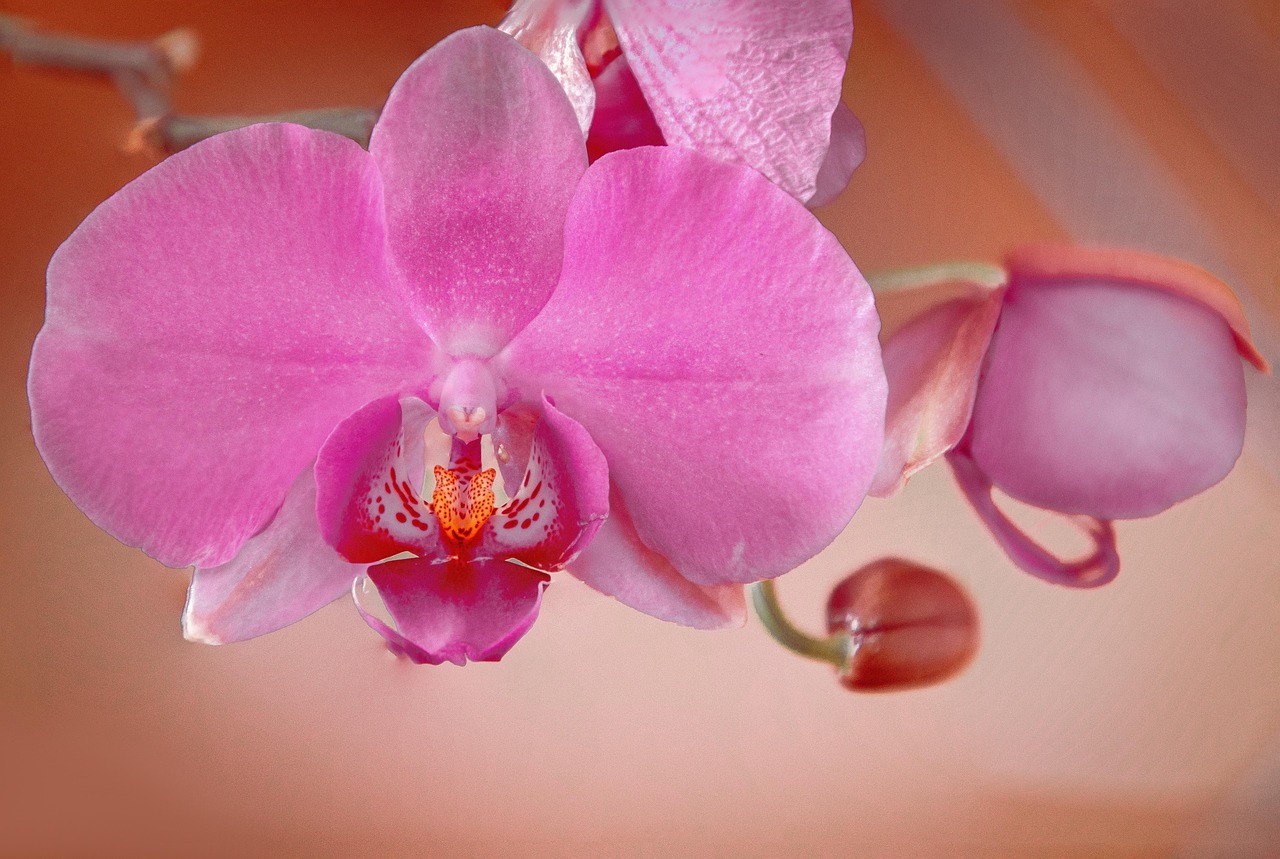
Growing orchids outdoors in south Florida
Most orchid advice is written for a windowsill in a cold climate. Here in zone 10b to 11, phalaenopsis, dendrobium, oncidium, cattleya and vanda can live outside all year, and almost everything about their care changes as a result.
Light
Full Miami sun will burn orchid leaves quickly — sometimes in a single afternoon. What these plants want is bright filtered light: under a tree canopy, on a shaded patio, or under shade cloth.
Rough guide by genus: phalaenopsis wants the deepest shade, around seventy per cent. Cattleya and oncidium take more. Vanda take the most and still want protection from direct midday sun in summer.
The leaves tell you. A healthy orchid leaf is mid-green. Very dark green means too little light and the plant will not flower. Yellowish-green or leaves with pale patches means too much.
Watering, which is completely different outdoors
Indoor orchids are watered weekly. Outdoors here in summer, a bark-mounted orchid in a slotted pot in a breeze can need water daily.
Then the rain arrives and does it for you. During the wet season a plant on an open patio may need no watering at all for weeks.
This is why the roots-and-condensation method matters more outdoors than in: the schedule changes constantly with the weather, and only the plant knows where it is.
Drainage matters correspondingly more. A slotted pot with a chunky bark medium will handle a summer downpour. A sealed pot with fine compost will not.
Humidity and airflow
Humidity is the one thing that is free here. What is not free is airflow, and in a humid climate the two must go together.
Still, humid air on wet leaves is how bacterial and fungal rot start. Orchids on a covered patio with no breeze are more at risk than orchids in an open position that dries after rain.
Space the plants. Do not let leaves of neighbouring pots touch. Water in the morning so foliage dries before nightfall.
Temperature and the cool snap
Winter here occasionally brings a night in the forties. Phalaenopsis and vanda are the most cold-sensitive and should come inside or under cover below about fifty degrees.
The compensation is worth having: many orchids need a drop in night temperature to trigger flowering. A cool spell in December is what makes phalaenopsis spike, and plants grown permanently indoors at a constant temperature often never do.
Outdoor growing here produces better flowering than a windowsill for exactly this reason.
The two weather events to plan for
Hurricane season. Plants in pots become projectiles. Have a plan that does not begin the day before a storm: a place to move them to, and enough hands to do it. Group pots low and against a wall if there is nowhere indoors.
Staked spikes are especially vulnerable. Remove tall stakes before a storm rather than letting them lever a plant over.
The long wet season. Weeks of daily rain saturate anything without real drainage. This is the period when sealed decorative pots kill plants, and when a slotted pot earns its cost.
Pests outdoors
More of them than indoors, and none exotic: scale, mealybug, thrips, snails and slugs.
Scale and mealybug show as small immobile bumps or cottony patches, usually on the leaf undersides and in the crown. Alcohol on a cotton bud removes them physically, which is the least aggressive treatment and works if you catch it early.
Snails eat root tips and flower buds overnight. If buds are disappearing and nothing is visible, check at night with a torch.
Inspect when you water. Weekly attention prevents almost everything.
Feeding
Orchids grown outdoors here grow strongly and are fed more often than indoor ones — the usual approach is a weak balanced fertiliser at most waterings during the warm months, easing off in winter.
Because bark drains fast, salts do not accumulate the way they do in a retentive medium, but flushing the pot with plain water once a month is still worth doing.
Mounting
The climate here allows something a northern grower cannot easily do: mounting orchids on bark, cork or a tree branch with no pot at all. It is how they grow naturally, and the humidity supports it.
Mounted plants dry fast and need watering daily in summer. That is the trade for roots that never rot.
Where to look
Slotted pots that handle a wet season are on the clear slotted orchid pots page. Nursery pots for growing on and for divisions are at nursery pots and tools, ceramic pots with drainage at ceramic and self-watering pots, and the supports that keep a spike upright in a breeze are at plant stakes and supports and orchid clips.